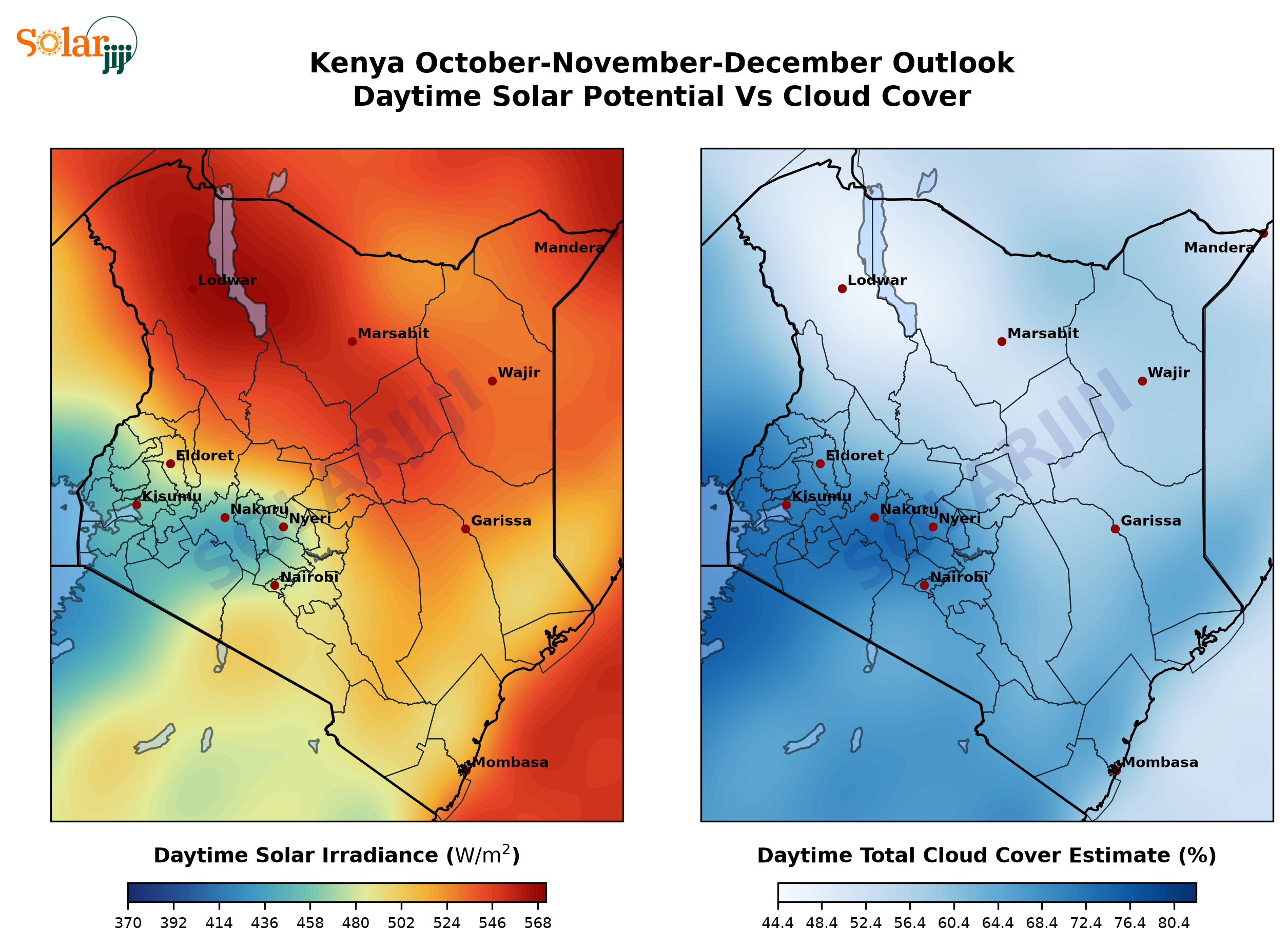
During this rainy season in Kenya, solar businesses need to think ahead. Kenya's anticipated above-average rainfall makes weather forecasting, resilient system design, and proactive customer communication more important than ever.
Above-average rainfall could bring prolonged wet spells, heavy rain, and less predictable solar generation across much of Kenya.
The evolving El Niño phenomenon, alongside conditions in the Indian Ocean, is contributing to the expected weather patterns. For millions of Kenyans, the rains bring opportunities to replenish water supplies and support agriculture. But for the country's growing solar energy sector, they also raise an important question:
How do we keep solar projects performing when the weather becomes less predictable?
At SolarJiji, we believe the answer starts with better forecasting, smarter planning, and giving solar professionals the tools they need to make informed decisions.
What is El Niño, and why should Kenya's solar industry care?
El Niño is a climate phenomenon associated with warmer-than-usual surface waters in the central and eastern tropical Pacific Ocean. It influences weather patterns around the world, including rainfall patterns in East Africa.
For Kenya, El Niño conditions can contribute to wetter-than-normal seasons, although the actual effects depend on other climate factors and regional conditions. The Kenya Meteorological Department's outlook for October–December 2026 anticipated above-average rainfall across much of the country. These conditions could bring prolonged wet spells, periods of heavy rain, and warmer-than-average temperatures in some areas.
For the solar industry, the concern is not the rain itself. It is how changing weather conditions affect the amount of sunlight reaching solar panels and, consequently, how much electricity those panels generate.
Three ways the rainy season could affect solar projects
Less predictable solar power generation
When thick cloud cover blocks sunlight, electricity production can decrease. A system might generate well in the morning, drop as clouds develop, and recover when skies clear. Households and businesses may have less energy available at certain times, while commercial facilities could rely more heavily on batteries or the grid.
For plant operators, fluctuating generation can complicate energy delivery and revenue forecasts. This is why understanding expected solar production under different weather conditions matters.
Greater pressure on system sizing and expectations
A solar system designed around energy needs and expected sunshine may still work as designed during prolonged cloud cover, but its production can differ from customer expectations.
Installers can reduce this risk by accounting for seasonal conditions, explaining expected production variations, and considering battery storage or alternative power sources. Good design is not just about installing enough panels—it is about expected performance throughout the year.
Weather-related operational challenges
Heavy rainfall can disrupt transport, delay site visits, and make installation or maintenance work more difficult. For developers managing multiple projects, these disruptions can affect timelines and costs.
Monitoring forecasts and scheduling site activities with local conditions in mind can help businesses reduce avoidable delays.
What can solar businesses do to prepare?
This rainy season in Kenya, is an opportunity for installers, developers, and energy operators to strengthen their planning.
Use seasonal forecasts
Understand expected conditions in every region where you operate.
Improve estimates
Account for seasonal variation when projecting electricity production.
Design for real needs
Consider consumption patterns, storage, and appropriate backup arrangements.
Monitor performance
Compare actual generation with expected output to spot weather or equipment issues.
Communicate early
Help customers prepare for seasonal periods of lower output.
These measures cannot eliminate uncertainty, but they can help solar businesses make better-informed decisions.
Where SolarJiji comes in
SolarJiji is building an AI-powered platform that helps solar professionals simplify project planning and make smarter decisions. It brings together solar energy forecasting, system sizing, 3D solar design, and access to solar equipment in one place.
As weather conditions change, forecasting can help professionals understand expected generation and incorporate seasonal considerations into project plans. Combined with thoughtful system design and performance monitoring, this information can help businesses manage expectations and plan more effectively.
El Niño is a reminder: smarter solar starts with better planning
Kenya's solar opportunity remains strong, even as weather patterns change. This is a reminder that successful solar deployment requires more than good equipment and installation. It requires understanding the local environment, anticipating changes in generation, and making decisions based on reliable information.
At SolarJiji, we believe the future of solar is not just about capturing sunlight. It is about helping the industry plan smarter, forecast better, and deliver more reliable solar projects. As we move through the October–December 2026 season, we encourage solar installers, developers, and energy operators to make weather awareness part of their project planning.
Build smarter solar projects with SolarJiji
Turn changing weather into better project decisions with forecasting, intelligent system sizing, and integrated solar design tools.
Sources: Kenya Meteorological Department, October–December 2026 Seasonal Weather Forecast; IGAD Climate Prediction and Applications Centre (ICPAC), Regional Climate Outlook for October–December 2026.